




Why AC-Coupled Energy Storage Works Best for Balcony Solar Systems


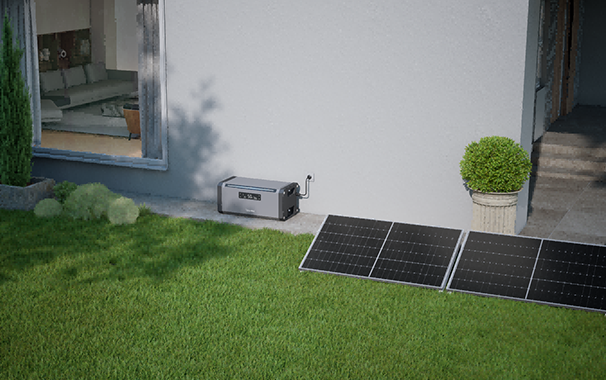
AC-Coupled Balcony Solar Storage Explained: Why It’s the Best Choice for Homeowners
Balcony solar systems have become a simple and efficient way for homeowners to embrace clean energy, especially in Europe. In Europe alone, more than 100,000 households have already installed balcony PV systems using Hoymiles’ microinverters, and that number is still growing fast. With more people looking to maximize their solar power, smart battery solutions that easily connect to existing systems—without complex rewiring—are becoming increasingly popular.
In this guide, we’ll break down why AC-coupled battery systems make the most sense for households who already own a balcony solar system, and why the AC-coupled option also makes the most financial sense for first-time solar users.
Why AC-coupled balcony energy storage Matters
If you already have a balcony solar system—or are planning to install one soon—AC-coupled energy storage offers the most flexible, future-proof, and cost-effective way to add battery capacity. Unlike hybrid or DC-coupled setups, AC-coupled storage works independently from your microinverter and connects directly to a standard home socket. This makes it the easiest solution for both new users and households upgrading an existing PV system.
Here’s why AC-coupling matters for most homeowners:
DIY-friendly: No rewiring, no complex setup. Simply plug the storage unit into any outlet, ideal for users who want a quick setup.
Perfect for retrofits: Fully compatible with existing microinverter systems. Ideal for users who already have balcony PV installed.
100% placement flexibility: Put the battery anywhere in your home without long extension cables, keeping your system tidy and extending product lifespan.
Step-by-step investment: Start out with solar and add storage later when you’re ready—without worrying about compatibility or causing any financial burden.
Effortlessly scaling up: Add more batteries over time to expand both your storage capacity and system output power.
Higher long-term reliability: Microinverters operate normally and aren’t forced to work at night, preserving system lifespan.
In short, AC-coupled solar storage gives homeowners an upgrade path that is simple, flexible, and financially smart, especially for apartments and urban homes where space and wiring options are limited.
What is an AC-coupled balcony energy storage?
In simple terms, the AC side of your solar system means the grid and power outlet while the DC side is your PV modules that generate DC electricity. Therefore, unlike a DC-coupled solution that is directly connected to PV modules, an AC-coupled battery storage is located on the grid side: either paired with a microinverter or directly plugged into a socket, as Hoymiles HiBattery AC.
Here is a simple comparison of the three options:
AC-coupled battery storage: PV modules – microinverter – battery storage – grid (microinverter and battery storage are either installed together or separately)
DC-coupled battery storage: PV modules – battery storage – microinverter – grid
Hybrid battery storage: PV modules – battery storage – grid
You can find a more detailed explanation in our previous blog on how DC-coupled, AC-coupled and hybrid battery storage differ from each other.
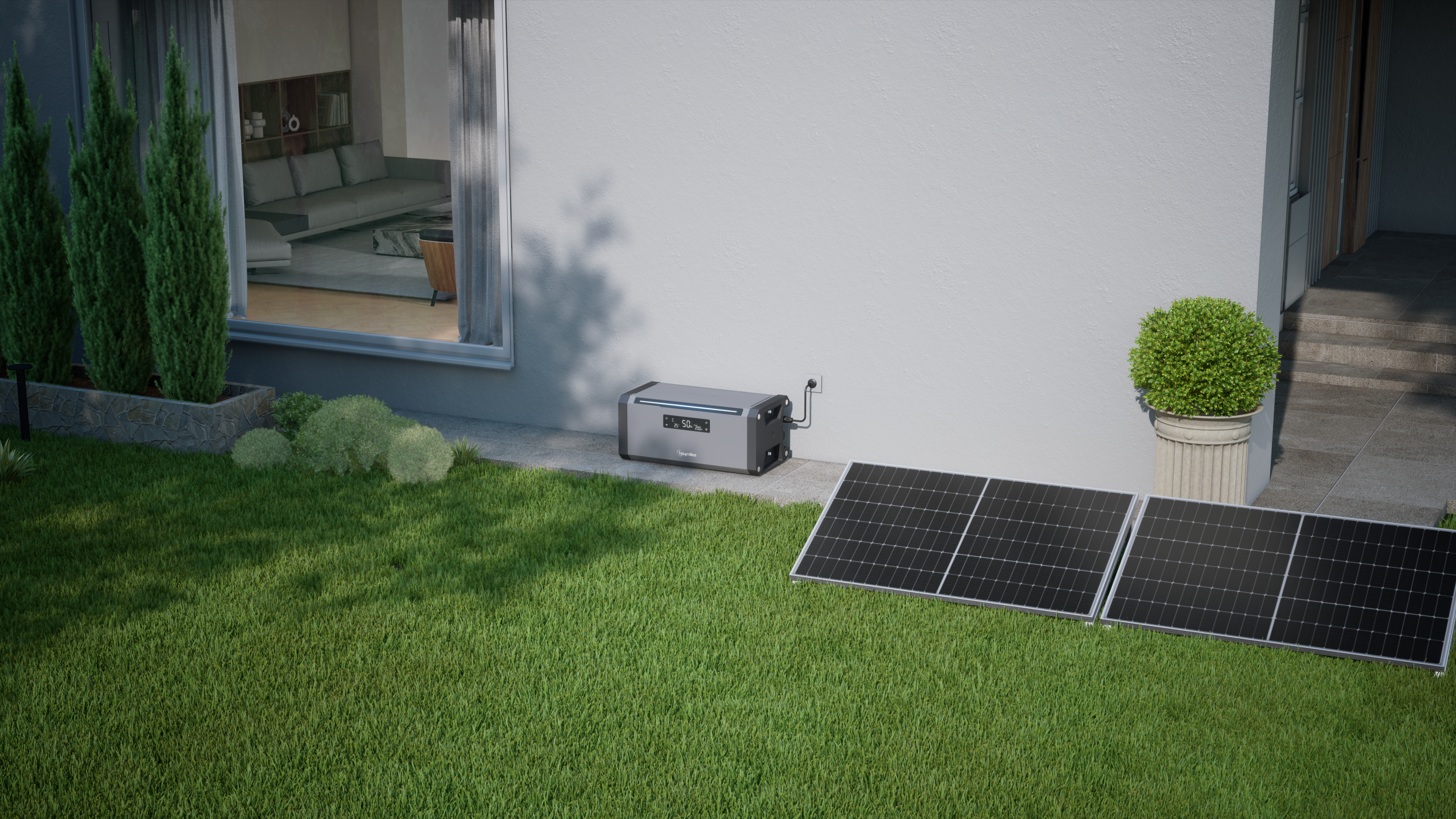
AC-coupled battery can be plugged into any home outlet
Why AC-coupled balcony solar energy storage fits most households
Before we dive into the details, here’s the simplest takeaway: AC-coupled balcony storage gives homeowners easier installation, stronger compatibility, lower upfront cost, and more flexible expansion.
Plug into any outlet: Super-easy for apartments and renters
One of the biggest advantages of an AC-coupled balcony storage system is its super-easy and flexible installation. It can be plugged into any home socket regardless of where your PV modules and microinverter are located. Here is an installation comparison between AC-coupled, DC-coupled and hybrid options.
Hybrid storage: Long and complex extension cables
At first sight, hybrid solutions seem to be more straightforward because the battery and microinverter are integrated into one unit. All you need to do is connect PV modules to the inputs of the battery storage.
But in reality, PV modules are oftentimes placed on rooftops, so if you don’t want to expose your energy storage to a challenging outdoor environment (which will reduce the product’s lifespan), you’ll need long extension cables to place the storage safely indoors. Let alone if you’d like a system expansion, you’ll need a lot more extension cables. This means extra installation effort and presumably, messier system layout.

Upgrading balcony solar AC-coupled battery doesn’t need extra wiring
DC-coupled storage: Complex retrofitting for existing PV system
For existing solar systems, upgrading to a storage system requires complex rewiring and a lot of connections, which can be challenging for DIY users.
AC-coupled storage: Simply plug into any home socket
For AC-coupled storage like Hoymiles HiBattery AC, however, a few plugs will do for the whole retrofit without any circuit modifications.
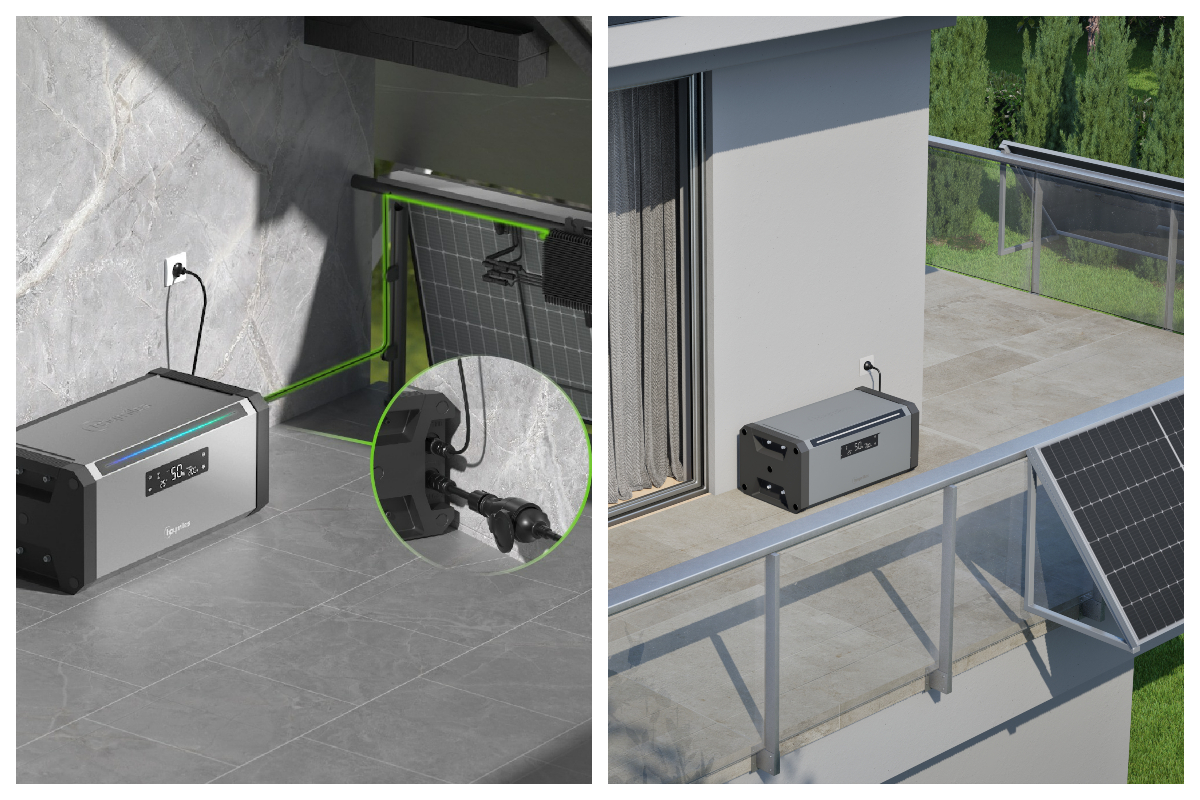
Hoymiles HiBattery AC can either be paired with microinverter or installed separately
Seamless compatibility with existing balcony solar kits
AC-coupled systems are designed to work perfectly with existing balcony solar setups, especially those using microinverters.
If you already have a microinverter system powering your balcony, hybrid system will not be the right solution for you. With built-in inverter, a hybrid storage unit will make your existing microinverter redundant—not a financially feasible decision.
DC-coupled battery storage is a good choice for system retrofit, but the problem is it’s not 100% compatible with different brands of microinverter due to MPPT algorithm simulation. Learn more about the MPPT challenge here.
DC-coupled system is also plagued by a shorter lifespan because the microinverter has to convert energy throughout the day constantly. Microinverters are designed on the premise that they only work during the daytime; however, a microinverter in a DC-coupled battery system also needs to operate at night for the system to function properly.
But AC-coupled products are not restricted by these issues. For some brands, like Hoymiles, the AC-coupled balcony solar battery is compatible with 100% microinverters. During the night, the microinverter will stop working as with any PV system, so the system life is much longer.
Makes the best financial sense
AC-coupled storage is also a financially feasible option for first-time users. When you start out your solar journey, you may not be ready for energy storage in one go (which can be costly). Maybe you’d like to try how solar living feels before adding battery storage. In this case, AC-coupled solution will be the best option because you can choose to add storage whenever you like without worrying about compatibility or rewiring issues.
In short, the step-by-step expansion of an AC-coupled solution is often more cost-effective than investing in a hybrid system upfront.
Easy system expansion
As your energy needs grow, so should your balcony energy storage system. With an AC-coupled battery, you just need to add more batteries. For example, if you move to a new home or simply want to power more appliances, adding more batteries instantly boosts both storage and output power.
By contrast, you also add more hybrid storage units for expansion, but the problem is that it will not increase your system output power, which limits how you utilize your energy.
AC-coupled vs. DC-coupled vs. hybrid storage: Which works better for balcony solar?
Here is a quick recap of a comparison between the three mainstream balcony solar solutions to help you better decide which one suits your conditions best.
| AC-coupled | DC-couple | Hybrid | |
Retrofit |
|
|
|
| System layout |
|
|
|
| Scalability |
|
|
|
Investment |
|
|
|
These differences matter especially for urban households where installation space and wiring options are limited.
Introducing Hoymiles HiBattery AC, your ideal balcony solar companion
This is exactly where Hoymiles HiBattery AC comes in, a fully AC-coupled balcony storage solution designed to maximize the benefits discussed above. Its simplicity, flexibility, and scalability make it a perfect match for existing balcony PV systems.
Plug into any home socket for ultimate flexibility
Hoymiles HiBattery AC is crafted to be 100% compatible with any microinverter, so no matter what microinverter you are using, you can easily upgrade your balcony solar setup with battery storage function.
Hoymiles takes the simplicity and flexibility to the next level: Once paired with a smart meter, the HiBattery AC can be plugged into any standard outlet in the home—no extension cables ever needed, and no side-by-side connection with a microinverter needed. Balcony, basement, garage, Hoymiles HiBattery AC can be put anywhere as you like.
This flexibility makes a clear difference in real use. You can design your system layout freely while maintaining high efficiency and a clean, cable-free aesthetic.
Easy scalability
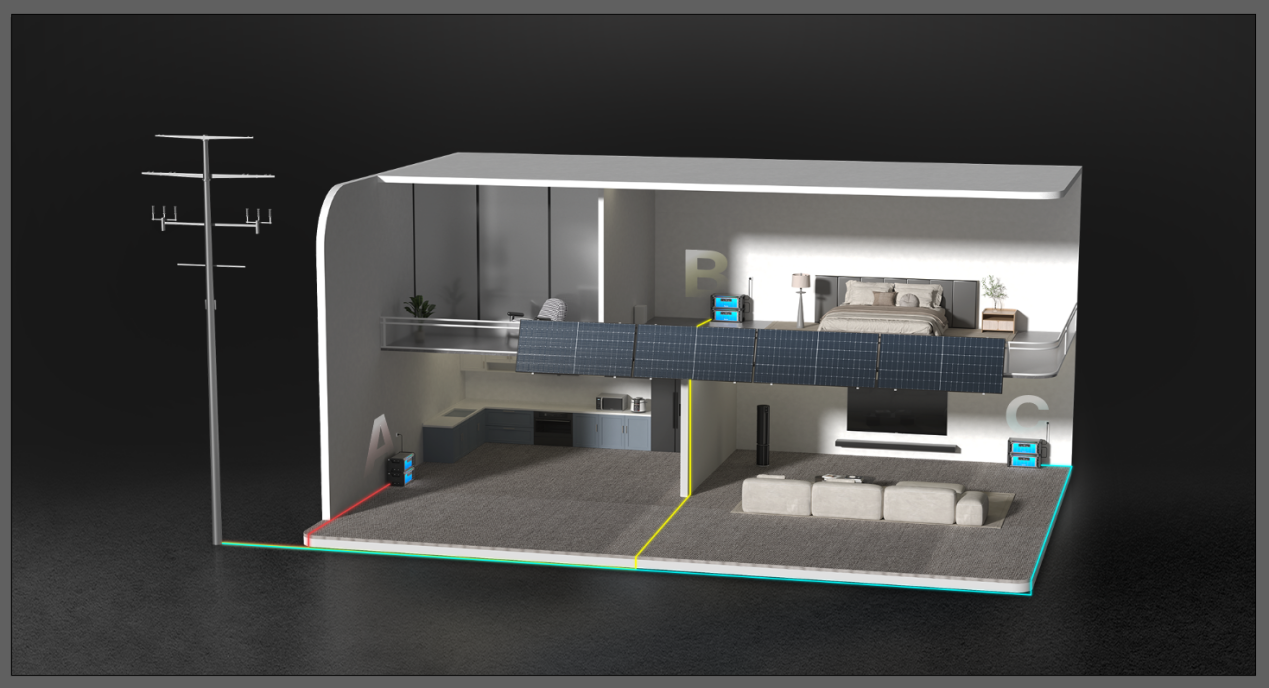
You can stack two HiBattery units to form a battery group, each offering 3.84 kWh storage capacity. The output power of a group is still 800 W by default and can be plugged into a standard socket. If you wire the batteries to the fuse box, you’ll get a maximum of 2,000 W output power.
If a battery group is still not enough for your energy needs, the system supports a three-phase connection, allowing you to plug three battery groups (altogether six units) in parallel into three home sockets with different phases. This connection expands the total capacity to 11.52 kWh and an output power of 2,400 W, ensuring that you have more than enough energy to power larger appliances or handle higher energy demands. If you wire the battery groups to the distribution box, the output power will be upgraded to 6,000 W, giving you a stable and reliable power supply.
| System expansion | Storage capacity | Output power (home outlet) | Output power (Fuse box) |
Two stacked units | 3.84 kWh | 800 W | 2,000 W |
| Six units in three cascading groups | 11.52 kWh | 2,400 W | 6,000 W |
Conclusion
In fast-growing balcony solar markets such as Germany, AC-coupled stands out as the smarter, more flexible, and more future-proof option.
And with its full AC-coupled architecture and 100% microinverter compatibility, HiBattery AC gives homeowners a seamless path to grow their balcony PV system step by step.


Subscribe to our newsletter and get the latest news!